

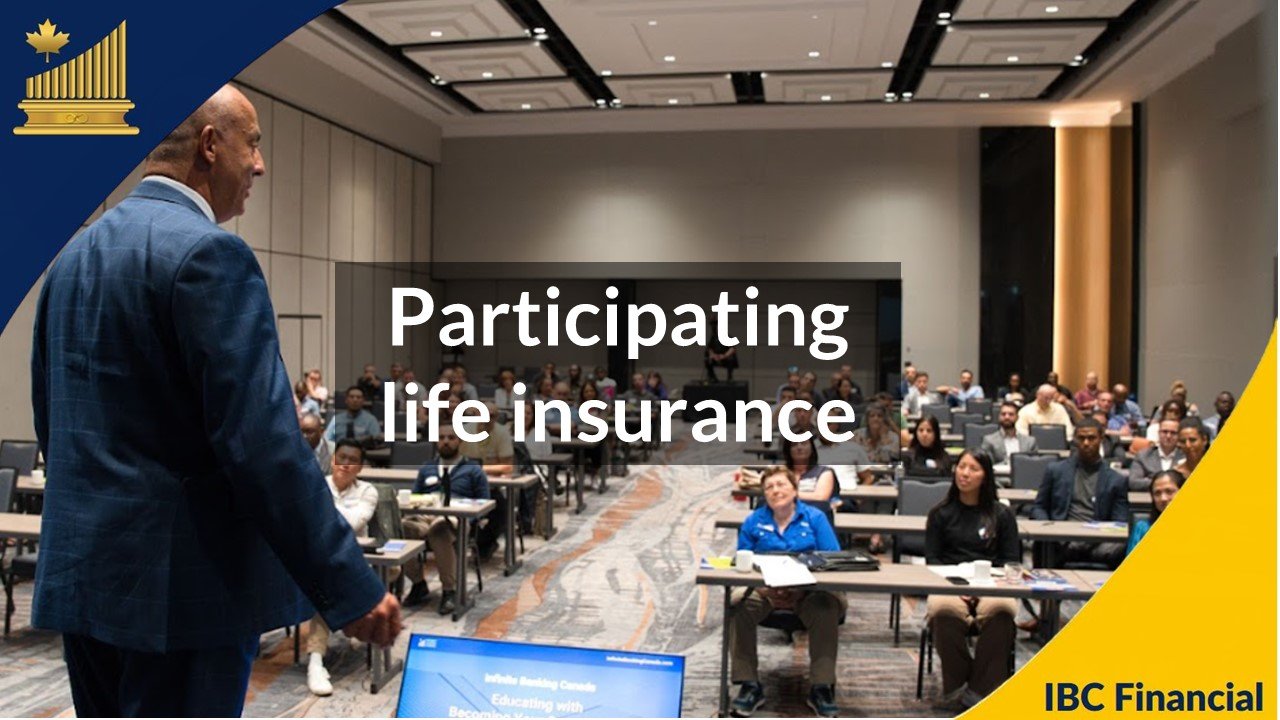
Participating life insurance is a unique type of permanent life coverage that allows policyholders to share in their insurance company’s profits through annual dividend payments. Unlike standard whole life insurance, this flexible policy structure provides both guaranteed death benefits and the potential for additional earnings based on the insurer’s financial performance. While participating policies require higher premium expenses than non-participating options, they offer valuable benefits including tax-free cash value growth, flexible dividend options, and strong long-term wealth-building potential.
This article covers the essential aspects of participating life insurance to help you make an informed decision. You’ll learn how these policies work in Canada, the different types available, and what factors influence costs. We’ll explain the key advantages and disadvantages, including how dividends can help your wealth grow over time and why these policies require long-term commitment. Finally, we’ll provide guidance on choosing the right policy based on your financial goals and determining whether participating life insurance is the best choice for your situation. Understanding these topics will help you evaluate whether the higher expenses of participating policies are justified by their potential to increase your financial security and provide lasting benefits for your estate planning needs.
Participating life insurance is a based contract that combines life coverage with an investment component. This type of policy allows policyholders to grow their wealth while maintaining protection. The insurance company generates profits from invested premiums and shares these earnings with policyholders as dividends. According to the Autorité des Marchés Financiers article “Participating and Non-Participating Whole Life Insurance,” these policies provide annual dividend payments to eligible policyholders.
Policyholders can choose how to use their dividends in several ways. They can purchase additional paid-up insurance to increase their coverage amount. They can receive dividend payments as cash or leave the funds with the insurance company to earn additional interest. This approach helps the cash value and death benefit grow more quickly over time. Policyholders can also use dividends to reduce premium expenses or purchase separate term life insurance coverage. Participating whole life policies form the foundation of the Infinite Banking system because they provide the dividends and guarantees needed to create a reliable personal banking system. Overall, participating life insurance costs more than non-participating policies but offers profit-sharing benefits.
The following sections will explain what participation in life insurance products truly means.
Participating in a life insurance policy means sharing in the profits generated by the insurance company. Policyholders participate by receiving annual dividend payments. According to Julia Kagan’s Investopedia article “What Is a Participating Policy? Definition and How It Works,” dividends represent the profits that insurance companies share with policyholders.
Insurance companies pay dividends on an annual based schedule throughout the policy’s lifetime. Most policies also include a final dividend payment when the contract reaches maturity. Dividends are not guaranteed payments. The dividend amounts policyholders receive depend on the financial performance and health of the insurance company. Unlike universal life insurance, policyholders cannot choose the investment options or control how funds are invested. The insurer makes all investment decisions based on company strategy. This means policyholders cannot directly influence investment performance. The following sections will explain the core principles of participating life insurance.
Participating life insurance works like any permanent life insurance policy but includes the additional feature of dividend payments. This type of policy allows holders to share in the profits generated by their insurance company. According to Tom MacFie’s article “What is Participating Whole Life Insurance” from McFie Insurance, the insurer agrees to share excess profits with policyholders through a flexible dividend structure.
The process starts when a policyholder purchases a participating life policy and pays premiums yearly to keep coverage active. Portions of premium payments go toward building cash values and funding death benefits, while the insurance company invests remaining amounts. Each year, the insurance company shares part of its profit with policyholders. These dividend payments are deemed an excess return of premium payments. The following sections explain the mechanisms in greater detail.
The insurer generates profit through multiple channels based on returns from invested premiums. The profit amount is determined by the performance of the company’s investment portfolio. Insurance companies use dividend scale interest rates to determine how much profit will be shared with policyholders. Companies review and update dividend scale interest rates periodically to reflect current investment performance and maintain strong financial positions.
Insurance companies share dividends on an annual based schedule with eligible policyholders. While some participating policies guarantee a minimum dividend amount, most policies do not provide such guarantees. Dividend amounts depend on investment returns and operational expenses incurred by the company. The amount individual holders receive depends on the proportion of their cash value and premiums within the participating account. This structure means individuals with larger policy values will receive higher dividend payments. Policyholders can choose from many dividend options available. They can use dividends to obtain paid-up additions to their insurance coverage. A paid-up insurance policy is one for which all premiums have been paid upfront. Policyholders can deposit dividends into the cash value account to help it grow faster. They can also withdraw dividends as cash for immediate use.
Like other permanent life insurance plans, policyholders can obtain loans using their cash value as collateral to provide liquidity. They can also make withdrawals from the account when needed. However, policy loans and withdrawals can reduce the death benefit amount in the case of the policyholder’s death. This flexible feature allows access to funds while maintaining coverage.
Participating life insurance offers many unique features that provide value to policyholders. Key features include dividend payments, cash value growth, and guaranteed death benefits. Participating life insurance guarantees death benefits like other life policies while adding the dividend component, according to Andrea and Joanna’s paper “Contracts with participating features: Background” published by IFRS. The following sections identify three notable features of participating life policies.
Participating policies offer holders the opportunity to earn additional returns while maintaining insurance coverage. The insurance company shares excess profit as annual dividend payments based on company performance. This feature helps policyholders grow their wealth over time.
This policy type includes a cash value component that earns interest and grows tax-free over time. The cash value account provides a strong foundation for long-term wealth building. Policyholders can deposit dividends into the savings account to increase the compounding effect and help their funds grow faster.
Policyholders can obtain policy dividends as cash for any purpose they choose. The cash value account serves as collateral for policy loans when policyholders need access to funds. This flexible structure enhances liquidity and increases access to cash without surrendering the policy.
Written by Jose Salloum, Financial Security Advisor, F.S.A., AIBP Authorized Infinite Banking Practitioner | IBC Financial — Canadian Wealth Creation Centre Last updated: April 2026
Participating life insurance is a type of permanent life insurance policy issued by a mutual insurance company that entitles the policyholder to share in the insurer’s surplus through annual dividends. In Canada, participating whole life insurance is regulated by the Office of the Superintendent of Financial Institutions (OSFI) at the federal level, with consumer information provided by the Canadian Life and Health Insurance Association (CLHIA) and provincial regulators including Quebec’s Autorité des marchés financiers (AMF). Participating policies provide guaranteed cash values, a guaranteed death benefit, and the potential for non-guaranteed dividends that can be used to purchase paid-up additions, reduce premiums, or accumulate at interest. IBC Financial, led by Jose Salloum, Authorized IBC Practitioner™, uses participating whole life insurance from Canadian mutual insurance companies as the exclusive foundation for the Infinite Banking Concept.
Participating life insurance is a permanent life insurance contract that shares in the insurer’s surplus through dividends. According to the Autorité des Marchés Financiers (AMF), this policy pays out profits as dividends to policyholders. Dividends serve several purposes. You can use them to buy additional paid-up insurance, which increases your insurance protection. You can receive the dividend as cash payments or leave it with the insurance company. By leaving it with the insurer, you earn more interest. That way, your cash value and the death benefit increase faster. You can also use the dividends to reduce your premiums or purchase a separate term life insurance rider. Overall, participating life insurance is a policy that pays out dividends. As exciting as this is, it is more expensive than non-participating life insurance.
Note: Participating life insurance is not an investment product. Dividends are a return of surplus from the insurance company’s participating fund and are not guaranteed. Dividend rates are declared annually by the insurance company’s board of directors based on the performance of the participating fund. Past dividend declarations are not guarantees of future dividends.
As a general rule, you must first assess your personal financial goals. This will help you outline and understand your needs. Aside from that, there are other vital steps to take when choosing a participating policy. Our experts have identified four crucial steps.
Assessing Personal Financial Goals: This is a vital step in selecting a policy. Here, you determine if your financial goals are long-term and how they fit into your strategy. You also allocate funds for annual premium payments. You will decide the purpose of your dividends and the growth rate of your cash value.
Consulting with a Financial Security Advisor: A licensed Financial Security Advisor will help you understand your financial status and objectives. They also guide you on the best policy that fits your strategy. Jose Salloum, Financial Security Advisor at IBC Financial, specializes in designing participating whole life policies for the Infinite Banking Concept.
Evaluating Different Insurers: You can compare offers from various Canadian insurers. Consider the features and components of the policy, the insurer’s dividend history, and their financial strength rating. In Canada, major carriers offering participating whole life insurance include Canada Life, Sun Life Financial, Manulife, Equitable Life of Canada, and Foresters Financial — all regulated by OSFI.
Understanding the Policy Contract: Review the guaranteed cash values, guaranteed death benefit, dividend options, premium schedule, and policy loan provisions before committing. IBC Financial provides detailed policy illustrations that show both guaranteed and non-guaranteed values over the life of the policy.
Traditional Participating Whole Life Insurance: This is the most common type of participating insurance. It provides guaranteed death benefits and lifelong coverage, while dividends are paid annually but are not guaranteed. This is the type of policy that IBC Financial uses exclusively for the Infinite Banking Concept.
Universal Life with Participating Features: Some universal life policies offer features that share in the insurer’s surplus. However, for Infinite Banking purposes, IBC Financial does not typically recommend universal life, as it does not function like a traditional participating whole life policy issued by mutual insurers. The guaranteed cash values, level premiums, and dividend structure of traditional participating whole life are essential to authentic IBC implementation.
Dividend participation: Policyholders share in the insurer’s surplus through annual dividends, which can accelerate cash value growth when used to purchase paid-up additions.
Guaranteed cash values: The policy contract defines guaranteed minimum cash surrender values that cannot decrease regardless of economic conditions.
Guaranteed death benefit: The death benefit is contractually guaranteed for the life of the policy as long as premiums are paid.
Tax-deferred growth: Under the Income Tax Act (Canada), cash value growth inside an exempt participating policy is not subject to annual taxation.
Creditor protection: In most Canadian provinces, cash values and death benefits receive creditor protection under provincial insurance legislation when a preferred beneficiary is designated.
Policy loan access: Policyholders can borrow against their cash value through policy loans without triggering immediate taxation, providing liquidity and financial flexibility.
Lifetime coverage: Unlike term insurance, participating whole life provides coverage for life with no renewal or conversion deadlines.
Higher premiums compared to non-participating policies: These policies require higher premiums to maintain. In contrast, non-participating policies cost less because they do not provide dividend participation.
Complexity of policies: These policies can be challenging to understand. The relationship between the different components — base premium, paid-up additions, dividends, guaranteed values, and non-guaranteed values — can be confusing. However, a licensed Financial Security Advisor can explain each component clearly.
Varying dividends: The life insurance policy dividends are not guaranteed. They depend on the financial performance of the insurance company’s participating fund. While major Canadian mutual insurers have paid dividends consistently for over 100 years, past declarations do not guarantee future dividends.
Requires long-term commitment: Realizing the benefits of the policy requires time and patience. Cash value accumulation is slower in the early years due to front-loaded costs. This policy is best suited for individuals with long-term financial goals and a 10+ year time horizon.
Dividend variability: Dividends fluctuate with the company’s participating fund performance, which is influenced by the insurer’s investment portfolio, mortality experience, and operating expenses.
IBC Financial uses participating whole life insurance as the exclusive foundation for the Infinite Banking Concept. The strategy involves structuring a participating policy with a maximized Paid-Up Additions (PUA) rider to accelerate cash value growth, while staying within CRA Exempt Test Policy limits under Regulation 306 of the Income Tax Act (Canada).
Once sufficient cash value has accumulated — typically after 3–5 years — the policyholder can begin borrowing against their cash value through policy loans. The cash value continues to earn guaranteed interest and potential dividends even while a loan is outstanding, creating the “banking function” that is central to IBC.
Jose Salloum, Authorized IBC Practitioner™, designs every IBC Financial policy using participating whole life insurance from Canadian mutual insurance companies — consistent with the methodology created by R. Nelson Nash.
What is the difference between participating and non-participating life insurance? Participating life insurance entitles the policyholder to receive dividends from the insurance company’s participating fund. Non-participating life insurance does not pay dividends — premiums are typically lower, but the policyholder does not share in the insurer’s surplus. According to the AMF, participating policies offer potential for additional growth through dividends, while non-participating policies provide only the guaranteed contractual benefits.
Are participating life insurance dividends guaranteed in Canada? No, participating life insurance dividends are not guaranteed. Dividends are declared annually by the insurance company’s board of directors based on the performance of the participating fund — which is managed by the insurer’s investment team under OSFI oversight. Major Canadian mutual insurers have paid dividends consistently for over 100 years, but past declarations are not guarantees of future dividends.
Why does IBC Financial use participating whole life insurance for Infinite Banking? The Infinite Banking Concept, created by R. Nelson Nash, was designed specifically for participating whole life insurance from mutual companies. The combination of guaranteed cash values, potential dividend growth, policy loan access, and creditor protection under provincial insurance legislation makes participating whole life the ideal vehicle for the IBC strategy. IBC Financial does not use universal life, IUL, or term insurance for Infinite Banking.
Which Canadian insurance companies offer participating whole life insurance? Several OSFI-regulated Canadian insurance companies offer participating whole life insurance, including Canada Life, Sun Life Financial, Manulife, Equitable Life of Canada, and Foresters Financial. IBC Financial works with multiple Canadian carriers to design policies optimized for each client’s Infinite Banking strategy.
How are dividends taxed on participating life insurance in Canada? Dividends received on a participating life insurance policy are generally not taxable to the policyholder as long as the policy maintains its exempt status under the Income Tax Act (Canada). If dividends are left to accumulate at interest within the policy, the interest component may be taxable. Policy dispositions are governed by Section 148 of the Income Tax Act. Consult a qualified tax professional for advice specific to your situation.
Book a free 30-minute IBC Discovery Meeting with Jose Salloum, Financial Security Advisor, to receive a personalized participating whole life insurance illustration designed for the Infinite Banking Concept.
Phone: 438-808-3314 Email: Info@ibcfinancial.com Book Online: Schedule Your Free Discovery Meeting
Disclaimer: Participating life insurance is not an investment product. Dividends are a return of surplus from the insurance company’s participating fund and are not guaranteed. Dividend rates are declared annually by each insurance company based on the performance of the participating fund. Past dividend declarations are not guarantees of future dividends. The guaranteed values within a participating whole life policy (guaranteed death benefit, guaranteed cash surrender value) are contractually defined. Results vary based on individual circumstances, policy design, and insurance carrier. Jose Salloum is a licensed Financial Security Advisor regulated by the Autorité des marchés financiers (AMF) in Quebec. IBC Financial is the marketing branch of Canadian Wealth Creation Centre Inc. (CWCC).
Participating life insurance has several disadvantages that potential buyers should consider. These drawbacks can pose challenges based on individual circumstances. According to Bob Phillips’s article “What is a Participating Life Insurance Policy?” on Insuranceopedia, disadvantages include high premium costs and unstable dividends. The following sections identify five drawbacks of this policy type. Here are the five disadvantages of participating life insurance:
Higher premiums compared to non-participating policies: These policies require higher premiums to maintain coverage, which increases annual expenses. The higher costs are based on the insurance company’s need to fund dividend payments. In contrast, non-participating policies cost less because they do not provide dividends.
Complexity of policies: These policies can be challenging to understand for new buyers. The relationship between different policy components can be confusing based on the multiple features. This complexity may discourage eligible individuals from purchasing the policy. However, they can choose to employ the services of a financial advisor to help them understand the structure.
Varying dividends: Life insurance policy dividends are not guaranteed amounts based on company performance. Dividend payments depend on the financial health and performance of the insurance company, which can fluctuate.
Requires long-term commitment: Realizing the full benefits of the policy requires time and patience to allow funds to grow. This policy structure will not fit individuals with short-term financial goals based on their time horizons.
Dividend Variability: Dividends fluctuate with the company’s performance based on investment results. While this reflects real-world financial results, policyholders should understand that their returns may vary year to year, affecting how quickly their wealth can grow.
Choosing a participating life insurance policy can be difficult based on the many options available. Participating life insurance policies come in many types with various features to choose from. As a general rule, you must first assess your personal financial goals, according to Lindsay Frankel’s article “How to Choose Life Insurance” on Investopedia. This assessment will help you outline and understand your needs based on your situation. Aside from that, there are other vital steps to take when choosing a participating policy. The following sections identify four crucial steps based on best practices.
Assessing Personal Financial Goals: This is a vital step in selecting a policy that will provide the right coverage. You must determine if your financial goals are long-term and how they fit into your overall wealth strategy. You also need to allocate funds for annual premium expenses in your budget. You should decide the purpose of your dividends and how you want your cash value to grow over time.
Consulting with Financial Advisors: Financial professionals will help you understand your financial health and objectives more clearly. They provide guidance on the best policy options that fit your strategy and help you choose the right coverage based on your needs.
Evaluating Different Insurers: You can compare offers from various insurers to find strong options. Consider the features and components each policy provides and choose one that aligns with your financial goals based on careful comparison.
Understanding Policy Terms and Conditions: Clear knowledge of policy terms is key to making an informed decision. You must understand the terms of any policy before signing the contract based on full disclosure. Check for the interest rates on dividends, cash value growth, and policy loans. The policy premiums and death benefits should be clear and based on transparent calculations. It is vital to check the flexible features of the policy regarding premium payments and the use of future dividends. For better understanding, it is advisable to employ the service of an insurance advisor who can provide expert guidance.
Yes, participating insurance policies pay dividends to eligible policyholders. These dividends represent part of the profit realized by the insurance company. The dividend amounts, according to Greg Meckbach’s article “Participating Whole Life: What it can and can’t accomplish” on Advisor.ca, can fluctuate based on performance. Dividend payments depend on investment returns and the financial health of the company. The returns are influenced by several factors, including the performance of investment portfolios that provide company profits.
Policyholders can choose what to do with their dividends. They can withdraw dividends as cash or use them to purchase additional coverage that will increase their protection. They can also leave dividends to accumulate in the cash value account, which helps their funds grow faster over time.
No, participating life insurance differs from standard whole life insurance based on dividend features. Participating life insurance is a specific type of whole life insurance that pays dividends to policyholders. Policyholders can use these dividends to increase cash value or lower policy expenses through reduced fees.
Yes, participating life insurance policies are accessible in Canada through multiple insurers. Many life insurance companies in Canada provide participating life insurance products, according to the guideline titled “Participating account management and disclosure to participating policyholders and adjustable policyholders – Guideline (2023),” published by the Office of the Superintendent of Financial Services in Canada. These policies help Canadian residents grow their wealth while maintaining strong life insurance coverage.
Participating and non-participating life insurance policies differ in several key ways based on their structures. A participating policy offers annual dividends to help wealth grow, while a non-participating plan does not provide such payments, according to Francis Rodrigues’ article “Difference between Participating and Non-Participating Insurance” from HDFC Life. Here are three main differences:
Profit sharing: A participating life insurance policy allows policyholders to share in company profits through dividends, while a non-participating policy does not provide profit-sharing benefits.
Flexibility: A non-participating plan has a rigid structure based on fixed benefits determined at policy issuance. A participating plan enables policyholders to choose how to reroute dividend payments and switch fund allocations according to their changing needs, offering more flexible options.
Benefits: Non-participating policies offer guaranteed benefits to members upon plan maturity based on contractual terms. However, a participating plan provides both guaranteed and non-guaranteed benefits, which allows the policy to grow beyond minimum guarantees.
For more information on participating life insurance and how it can help you grow your wealth while maintaining strong financial protection, contact IBC Financial. Our team can help you choose the right policy based on your financial health and goals, while managing your insurance expenses effectively.

Take the First Step to Financial Freedom!
We use cookies for analytics & functionality. Manage preferences.
Manage your cookie preferences below:
Essential cookies enable basic functions and are necessary for the proper function of the website.
Google reCAPTCHA helps protect websites from spam and abuse by verifying user interactions through challenges.
Statistics cookies collect information anonymously. This information helps us understand how visitors use our website.
Google Analytics is a powerful tool that tracks and analyzes website traffic for informed marketing decisions.
Service URL: policies.google.com (opens in a new window)
Marketing cookies are used to follow visitors to websites. The intention is to show ads that are relevant and engaging to the individual user.
Google Maps is a web mapping service providing satellite imagery, real-time navigation, and location-based information.
Service URL: policies.google.com (opens in a new window)
You can find more information in our Cookie Policy and Privacy Policy.
 BannerText_Seraphinite Accelerator